
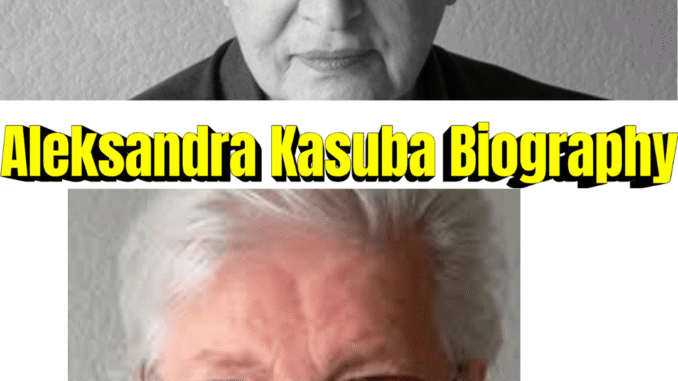
The Aleksandra Kasuba biography reveals the extraordinary life of a pioneering environmental artist who transformed fabric into immersive architectural experiences. Aleksandra Kasuba was a Lithuanian-American visionary best known for her innovative tensile fabric installations that blurred the boundaries between sculpture, architecture, and spatial design. Her artistic journey reflects resilience, experimentation, and a bold rethinking of how humans interact with space.
Throughout her long and productive life, Kasuba challenged conventional art forms. Instead of traditional paintings or sculptures placed on pedestals, she created environments that surrounded viewers completely. She believed art should not just be seen—it should be experienced.
Aleksandra Kasuba Biography
| Field | Details |
|---|---|
| Full Name | Aleksandra Fledžinskaitė-Kasuba |
| Known As | Aleksandra Kasuba |
| Born | 1923, Lithuania |
| Died | 2019 |
| Nationality | Lithuanian-American |
| Profession | Environmental Artist |
| Artistic Style | Tensile Fabric Installations |
| Known For | Immersive architectural sculptures |
| Migration | Relocated to the United States |
| Legacy | Pioneer in spatial and environmental art |
Early Life and Background
Aleksandra Kasuba was born in Lithuania in 1923. Her early life was shaped by political turmoil and the disruption caused by World War II. Growing up during such uncertain times influenced her worldview and later artistic philosophy.
As a young woman, she showed a strong interest in art and design. Lithuania, rich in culture and tradition, gave her early exposure to craftsmanship and aesthetics. However, the war forced many families, including hers, to reconsider their futures.
Eventually, she emigrated to the United States. Like many immigrants, she faced the challenge of starting over in a new country. Yet this transition also opened doors to creative freedom and experimentation.
Education and Artistic Formation
Kasuba pursued art education both in Europe and later in the United States. She was deeply influenced by modernist movements and architectural innovation.
Her studies were not limited to painting or sculpture. Instead, she explored how materials behave in space. She became fascinated with structure, tension, and form.
This curiosity led her to experiment with synthetic fabrics. While others used canvas for painting, she used it to construct entire environments.
Her artistic formation was rooted in:
- Modernism
- Architecture
- Structural experimentation
- Material innovation
She was not content with flat surfaces. She wanted to reshape space itself.
Artistic Breakthrough and Fabric Installations
The turning point in the Aleksandra Kasuba biography came when she began creating tensile fabric environments in the 1970s. These installations were groundbreaking.
Using stretchable synthetic fabric, she created smooth, flowing forms that filled rooms. The material was anchored to walls and ceilings, forming cave-like interiors that visitors could walk through.
These works were:
- Immersive
- Minimalist
- Architectural
- Experiential
Unlike rigid sculptures, her installations felt organic and fluid. Viewers often described them as calming and futuristic.
Kasuba believed architecture did not always need heavy materials like concrete or need heavy materials like concrete or steel. She proposed lighter, adaptable structures that responded to human presence.
Major Works and Recognition
Aleksandra Kasuba exhibited her works widely across the United States and internationally. Her installations were displayed in museums, galleries, and academic institutions.
Her contributions earned her recognition in the field of environmental art. Critics praised her ability to merge engineering principles with artistic sensitivity.
She also experimented with modular living concepts, envisioning lightweight housing structures that could adapt to changing needs.
Some of her works were later acquired by major art institutions, preserving her legacy for future generations.
Philosophy and Creative Vision
Kasuba’s philosophy centered on the relationship between humans and space. She once suggested that traditional architecture often limits human experience.
Her installations encouraged:
- Reflection
- Movement
- Emotional connection
- Sensory awareness
She believed art should transform how we feel inside a space. Rather than imposing rigid boundaries, her structures embraced flexibility.
In many ways, she was ahead of her time. Today, immersive installations are popular worldwide, but Kasuba was experimenting with them decades earlier.
Personal Life and Resilience
Immigration shaped much of her personal narrative. Moving to the United States required adaptation, perseverance, and courage.
Despite cultural adjustments, she maintained strong ties to her Lithuanian heritage. Later in life, she returned to Lithuania and established a studio near her hometown.
Her life story is one of resilience. Surviving war, displacement, and reinvention, she transformed adversity into creativity.
Later Years and Legacy
Aleksandra Kasuba continued creating art well into her later years. Even in her 80s and 90s, she remained intellectually active and visionary.
She passed away in 2019, leaving behind a powerful legacy.
Today, she is remembered as:
- A pioneer of environmental art
- An innovator in fabric architecture
- A bridge between sculpture and spatial design
Art historians increasingly recognize her as an early contributor to immersive art practices that dominate contemporary exhibitions.
Influence on Contemporary Art
Modern installation artists often create large-scale immersive works. While technology has advanced, the conceptual roots of such experiences can be traced to pioneers like Kasuba.
Her emphasis on:
- Lightness
- Fluidity
- Interaction
continues to inspire architects and artists alike.
She demonstrated that space itself could become sculpture.
Conclusion
The Aleksandra Kasuba biography tells the story of a visionary who reshaped how we experience space. Through innovation, courage, and imagination, she transformed fabric into architecture and rooms into living sculptures.
Her life reflects resilience in the face of historical upheaval and creativity beyond conventional boundaries. Today, her legacy lives on in museums, academic studies, and the immersive art experiences that continue to captivate audiences worldwide.
Aleksandra Kasuba did not simply create art—she created environments that invited people to step inside imagination itself.
Frequently Asked Questions (FAQs)
1. Who was Aleksandra Kasuba?
Aleksandra Kasuba was a Lithuanian-American environmental artist known for immersive tensile fabric installations.
2. What is Aleksandra Kasuba famous for?
She is famous for creating large-scale fabric environments that blended sculpture and architecture.
3. When was Aleksandra Kasuba born?
She was born in 1923 in Lithuania.
4. Where did Aleksandra Kasuba live?
She lived in both Lithuania and the United States.
5. What artistic style did she use?
She specialized in environmental and spatial art using synthetic tensile fabrics.
6. When did Aleksandra Kasuba pass away?
She passed away in 2019.
Leave a Reply